

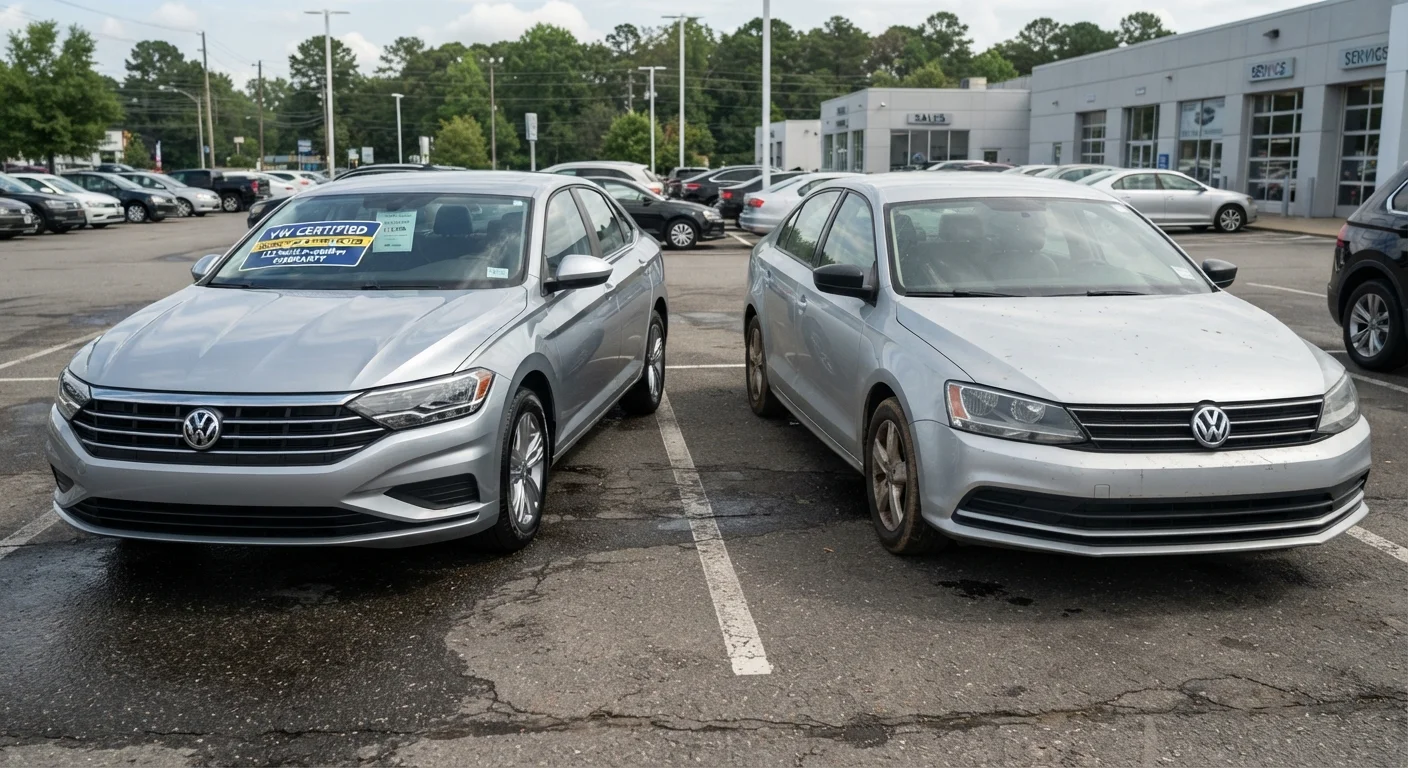
Key Takeaways
- CPO vehicles are inspected against manufacturer standards and come with extended warranty coverage; standard used cars are sold largely as-is.
- CPO programs typically add $1,000-$3,000 to a vehicle's price compared to equivalent non-certified used models.
- The CPO premium is most justifiable on complex, higher-mileage vehicles or when you lack mechanical knowledge.
- A pre-purchase inspection from an independent mechanic can close much of the information gap on standard used vehicles.
- CPO financing rates from manufacturers can sometimes offset part of the price premium.
- Neither option is universally better - the right choice depends on the vehicle, budget, and your risk tolerance.
Option A
Certified Pre-Owned (CPO)
The manufacturer-backed, inspected, and warranted choice.
Best for: Buyers who want peace of mind, remaining warranty coverage, and a lower-risk used-car experience without paying new-car prices.
Option B
Standard Used
The flexible, lower-cost option for informed shoppers.
Best for: Budget-conscious buyers who are willing to do their homework, get an independent inspection, and accept more variable risk.
If you want reduced risk without mechanical expertise
Certified Pre-Owned (CPO)
Manufacturer inspections and extended warranties provide a meaningful safety net if you can't or don't want to independently vet the vehicle's condition.
If you're on a tight budget and willing to do due diligence
Standard Used
With a thorough pre-purchase inspection and a clean vehicle history report, a standard used car can deliver strong value at a significantly lower price point.
If you're buying a luxury or technologically complex vehicle
Certified Pre-Owned (CPO)
Repair costs on premium vehicles tend to be higher, making the warranty coverage that comes with CPO status more financially significant.
If you're buying an older, higher-mileage vehicle
Standard Used
Most CPO programs only certify vehicles within strict age and mileage limits; older vehicles simply won't qualify, making a standard purchase with an inspection the only path.
What CPO Actually Means - and What It Doesn't
The term "certified pre-owned" is not a universal standard. Each automaker - and some dealer groups - runs its own CPO program with its own inspection criteria, warranty terms, and eligibility rules. Most manufacturer-backed CPO programs require vehicles to be within a certain age window (commonly five to seven years) and under a set mileage threshold (often 60,000 to 80,000 miles). Vehicles that pass a multi-point inspection - typically 100 to 200 checkpoints covering mechanical systems, safety components, and cosmetic condition - are then reconditioned and sold with an extended warranty.
That extended warranty is the centerpiece of the CPO value proposition. For many programs, it adds powertrain coverage on top of any remaining factory warranty, effectively giving buyers some of the same protection they'd have with a new vehicle. Some programs also include roadside assistance, loaner vehicles, and trial subscriptions to connected services.
What CPO does not guarantee is perfection. Inspections are conducted by dealer technicians, not independent third parties, and the depth of those inspections varies. A CPO badge signals that certain standards were met - not that the car is free of all defects or prior damage. Always review the specific inspection checklist and warranty terms for the program covering the vehicle you're considering.
Dealer-Certified vs. Manufacturer-Certified
Not all CPO programs are equal. Manufacturer-backed CPO programs (run by the automaker) tend to have stricter standards and more comprehensive warranties than dealer-certified programs, which are created and administered by individual dealerships. When evaluating a CPO vehicle, confirm whether the certification is manufacturer-backed or dealer-created, and review the warranty terms carefully before assuming they are equivalent.
The Standard Used Car Market: More Variables, More Room to Negotiate
Standard used vehicles - sold by franchised dealers, independent lots, or private sellers - carry no manufacturer-backed inspection promise. Condition varies enormously, from nearly-new trade-ins with full service records to high-mileage vehicles with undisclosed issues. That variability is both the risk and the opportunity.
Because standard used cars don't carry certification overhead, they're typically priced lower than comparable CPO models - sometimes meaningfully so. That gap creates negotiating room and the ability to allocate savings toward a thorough pre-purchase inspection checklist from an independent mechanic, which can surface many of the same concerns a CPO inspection would catch.
A vehicle history report (such as those available from services using NMVTIS-connected data) is an important starting point, but it has limits - it won't reveal maintenance neglect or unreported mechanical wear. That's where an independent inspection earns its cost many times over. Watch for red flags in used car listings like vague descriptions, missing service history, or photos that avoid key areas of the vehicle.
| Criterion | Certified Pre-Owned | Standard Used |
|---|---|---|
| Inspection | Multi-point, manufacturer-defined | None required; varies by seller |
| Warranty | Extended coverage included | As-is or limited dealer warranty |
| Price | Higher (typically $1,000-$3,000 premium) | Lower; more negotiating room |
| Age/mileage eligibility | Strict program limits apply | Any age or mileage |
| Financing options | Manufacturer incentive rates available | Standard market rates apply |
| Third-party inspection | Helpful but rarely required by sellers | Strongly recommended before purchase |
| Condition transparency | Structured disclosure via checklist | Varies; buyer must verify independently |
Breaking Down the Price Premium - and When It Pays Off
Industry data generally places the CPO premium at roughly $1,000 to $3,000 above a comparable non-certified used vehicle, though this varies by brand, model, and market conditions. Whether that premium is worthwhile depends on several factors.
$1,000-$3,000
Typical CPO price premium over comparable used
Based on widely reported industry estimates across multiple vehicle segments and CPO programs.
100-200
Inspection checkpoints in most CPO programs
The number of inspection items varies by manufacturer; buyers should request the specific checklist for their program.
5-7 years
Common maximum vehicle age for CPO eligibility
Most manufacturer-backed CPO programs exclude vehicles older than five to seven model years from certification eligibility.
Warranty value: If the vehicle is between the original warranty's expiration and the CPO extension's coverage, you're essentially prepaying for protection. Run the numbers: what would a comparable extended warranty cost you to purchase separately on the open market? If the CPO warranty costs less, it's adding real value.
Financing advantage: Many automakers offer lower APR financing on CPO vehicles through their captive finance arms. If you're financing, a lower rate can partially offset the higher sticker price. Get pre-approved for an auto loan before visiting the dealer so you can compare the manufacturer rate against outside offers objectively.
Vehicle complexity: CPO coverage makes more financial sense on vehicles with expensive-to-repair systems - turbocharged engines, dual-clutch transmissions, advanced driver-assistance technology - where an unexpected repair could run several thousand dollars. On a simpler, high-reliability model with a strong long-term track record, the premium is harder to justify.
For buyers comparing used-car ownership against other options entirely, buying vs. leasing a new vehicle covers how those trade-offs look when new-car pricing enters the picture.