

Key Takeaways
- Always inspect a used vehicle in daylight and on a level surface for the most accurate assessment.
- A professional pre-purchase inspection from an independent mechanic is strongly recommended before any purchase.
- Verify the VIN on the vehicle matches every document, including the title and history report.
- Mechanical issues and mismatched paint are easier to negotiate on-or walk away from-before signing.
- Never skip reviewing the vehicle history report and confirming a clean title free of liens.
Summary
24 items · 45-90 minutes
Why This Checklist Exists
Buying a used vehicle is one of the larger financial commitments most people make outside of a home purchase. Yet it's surprisingly easy to get swept up in excitement-or seller pressure-and overlook details that become expensive problems a month later. This checklist is designed to slow that process down in the right places.
Whether you're buying from a private seller or a dealership lot, the core inspection principles are the same. For a full picture of the entire buying journey, see our complete used car buying walkthrough, which covers everything from setting a budget to completing paperwork. This checklist focuses specifically on what to evaluate before you agree to anything.
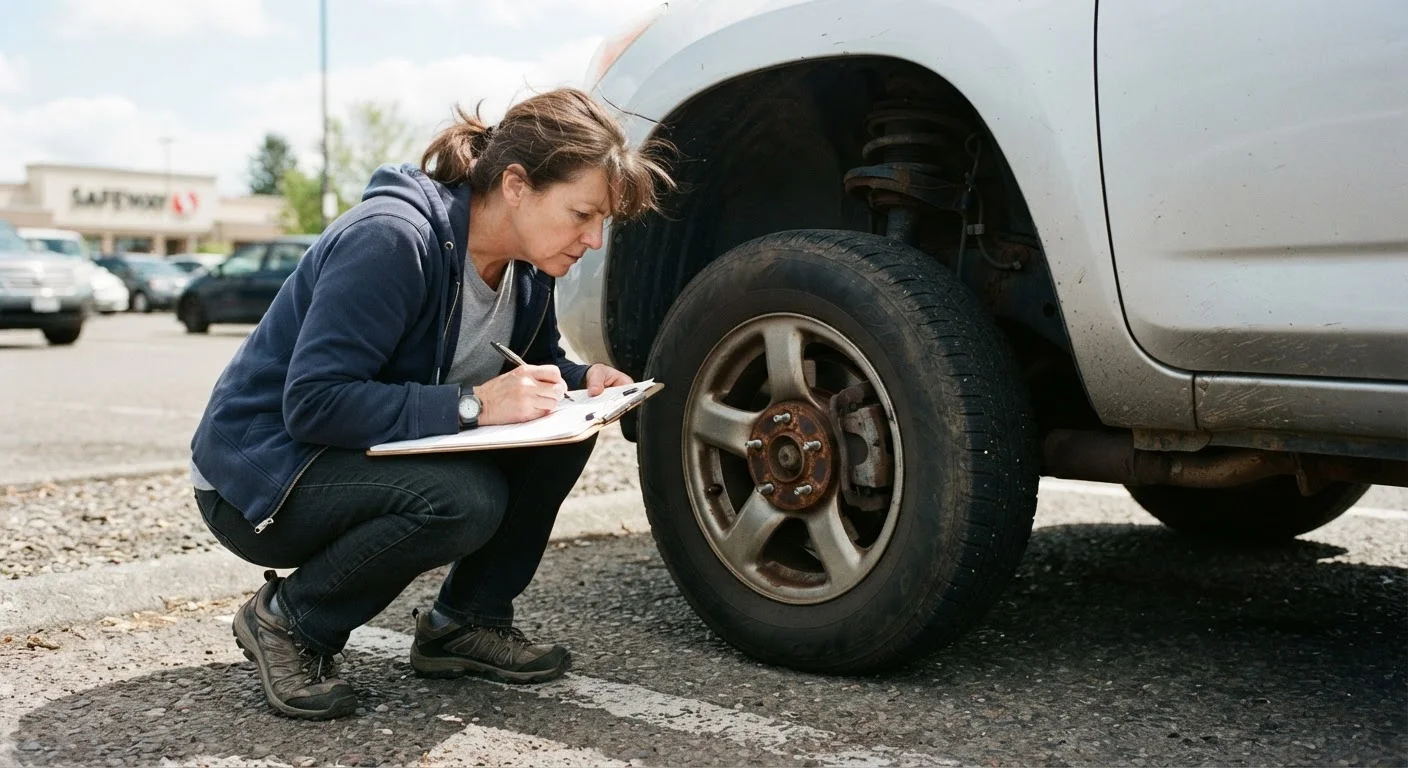
Work through each group below in order. Some items you can handle yourself; others-particularly the mechanical deep-dive-are best left to a qualified, independent mechanic.
Documentation & History
Exterior Condition
Interior Condition
Mechanical Inspection
Tools You'll Need on Inspection Day
Coming prepared makes the difference between a surface-level look and a genuinely useful inspection. Gather these items before you visit the vehicle.
Vehicle History Report Service
Pulls accident, ownership, title, and odometer records using the vehicle's VIN before you arrive.
Tread Depth Gauge
Measures remaining tire tread precisely so you can estimate replacement costs.
OBD-II Scanner
Reads stored and pending fault codes from the vehicle's onboard computer to uncover hidden issues.
Flashlight or Inspection Light
Illuminates the engine bay, undercarriage, and interior corners that are difficult to see in ambient light.
Government-Issued ID of Seller
Needed to verify the seller's identity matches the name on the vehicle title.
NHTSA Recall Lookup (safercar.gov)
Confirms whether any open safety recalls apply to the specific vehicle using its VIN.
What to Do If You Find Problems
No used vehicle is perfect. The goal of this checklist isn't to find a flawless car-it's to understand exactly what you're buying and price the vehicle accordingly.
Never Skip the Independent Mechanic
A visual inspection by a buyer-however thorough-cannot substitute for a lift inspection by a trained technician. Hidden structural damage, leaking gaskets, worn brake hardware, and suspension issues are frequently invisible without professional equipment. Budget for this step before you budget for the car itself.
Pressure to Sign Quickly Is a Warning Sign
Any seller who discourages questions, rushes the inspection, or claims another buyer is waiting may be attempting to prevent you from finding problems. A vehicle in good condition and a seller acting in good faith will accommodate reasonable due diligence. Walk away if you feel rushed.
Minor cosmetic issues (small door dings, worn floor mats, a cracked center-console lid) are normal and rarely worth walking away from. Mechanical concerns-especially anything involving the engine, transmission, frame, or safety systems-are a different matter. If your own inspection raises flags, paying for an independent mechanic's pre-purchase inspection (PPI) is money well spent. Expect to spend roughly $100-$200 for a thorough PPI at a reputable shop; that fee is far smaller than an unexpected repair bill.
If the seller refuses to allow an independent inspection, treat that as a significant red flag. Transparent sellers typically welcome the scrutiny.
Once you're satisfied with the vehicle's condition, make sure your financing is in order before you finalize anything. Understanding how auto loan pre-approval works can strengthen your position considerably at the point of sale. You may also want to review how a certified pre-owned vehicle compares to a standard used car if you're weighing both options.
This checklist is for general informational purposes only and does not constitute professional mechanical, legal, or financial advice. Always consult a licensed mechanic and verify all documentation with appropriate professionals before completing a vehicle purchase.