

Key Takeaways
- Oahu balances world-class beaches, urban amenities, and rich history — ideal for first-time visitors.
- Maui suits travelers seeking a mix of adventure, resort luxury, and scenic drives like the Road to Hana.
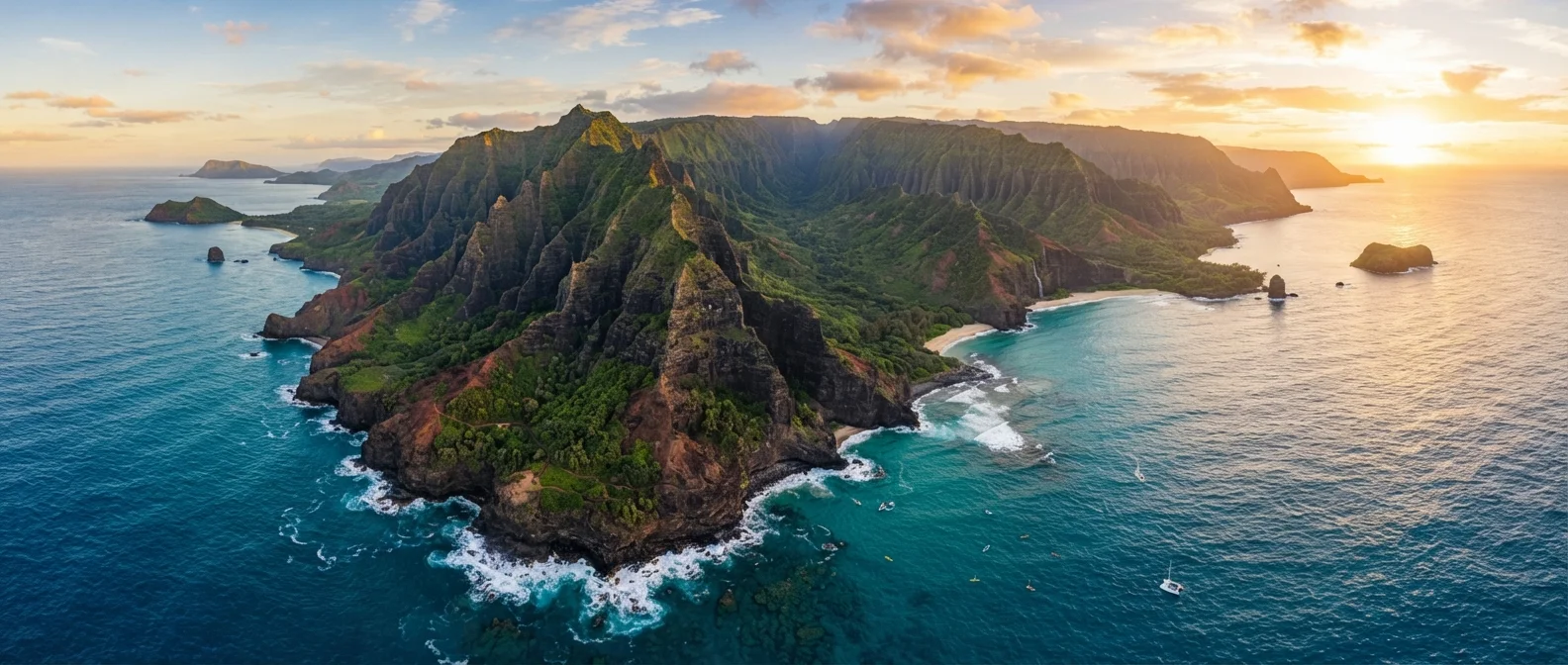
- Kauai is Hawaii's most dramatic natural landscape, best for hikers and those seeking seclusion.
- The Big Island offers unmatched geographic diversity, including active volcanoes and snow-capped peaks.
- Molokai and Lanai provide genuinely off-the-beaten-path escapes with limited tourist infrastructure.
- Island-hopping is feasible, but inter-island flights add cost and logistics worth planning in advance.
Our Verdict
No single Hawaiian island is objectively superior — each rewards a different travel style. Oahu delivers the most accessibility and variety; Kauai and the Big Island reward nature-first travelers; Maui threads the needle between adventure and comfort; while Molokai and Lanai offer rare solitude for those willing to forgo conveniences.
| Best for | Recommended |
|---|---|
| First-time visitors and families | Oahu |
| Hikers, nature lovers, and those seeking seclusion | Kauai |
| Travelers wanting resort luxury with outdoor adventures | Maui |
| Geology enthusiasts and those craving geographic variety | Big Island |
How Hawaii's Islands Actually Differ
Hawaii's six visitor-accessible main islands — Oahu, Maui, the Big Island (Hawaii Island), Kauai, Molokai, and Lanai — are separated by more than ocean channels. Each has its own microclimate patterns, dominant landscape, lodging ecosystem, and cultural rhythm. Choosing the right one isn't about finding the "best" island; it's about matching an island's character to your priorities, pace, and budget.
A few fundamentals apply everywhere: all inter-island travel requires a domestic flight or, rarely, a ferry (between Maui and Lanai). Accommodation ranges from budget vacation rentals to ultra-luxury resorts. Rental cars are strongly recommended on most islands except for Oahu, where TheBus public transit system is a viable option in Honolulu.
| Oahu | Maui | Kauai | Big Island | Molokai | Lanai | |
|---|---|---|---|---|---|---|
| Best for | First-timers, families | Adventure + resort mix | Hiking, nature escapes | Geology, diversity | Cultural immersion | Luxury seclusion |
| Landscape character | Urban beaches, landmarks | Volcanoes, rainforest, coast | Sea cliffs, lush valleys | Lava fields, snow peaks | Tall sea cliffs, rural | Arid uplands, quiet coves |
| Accommodation range | Budget to luxury | Mid-range to luxury | Mid-range, limited luxury | Budget to luxury by coast | Very limited | High-end only |
| Nightlife & dining | Most extensive | Good variety | Limited, low-key | Moderate (Kona coast) | Minimal | Minimal |
| Car needed | Optional in Honolulu | Yes | Yes | Yes | Yes | Mostly 4WD |
| Crowds | High | High | Moderate | Moderate | Very low | Very low |
Oahu, Maui, and Kauai: The Three Main Draws
Oahu is Hawaii's most visited island and the state's urban hub. Honolulu, Waikiki Beach, Pearl Harbor, and Diamond Head are all here. The island's infrastructure is the most developed, with the widest range of accommodation price points, robust public transit in urban areas, and direct flights from most major US mainland cities. It suits first-time visitors, families, and anyone who wants cultural landmarks alongside beach time.
Maui threads the needle between amenity-rich resort living and genuine natural adventure. Haleakalā National Park, the Road to Hana, and world-class snorkeling at Molokini Crater are draws for active travelers. Resort corridors like Wailea offer polished, upscale options. Maui typically requires a rental car, and accommodation costs trend higher than Oahu's mid-range options.
Kauai — nicknamed the Garden Isle — is Hawaii's oldest main island geologically and arguably its most visually dramatic. The Na Pali Coast, Waimea Canyon, and Hanalei Bay define an island with limited resort density and strict development height limits that preserve its unspoiled feel. It's ideal for hikers and those prioritizing scenery over nightlife.
Timing Your Visit Around Weather
Hawaii's islands all have a dry (leeward) side and a wet (windward) side. On any island, staying on the leeward coast — typically the west or south shore — dramatically improves your odds of sunshine, especially November through March. Kauai's Na Pali Coast, for instance, is most accessible by trail during the drier summer months. Check island-specific microclimates rather than relying on statewide weather generalizations.
Big Island, Molokai, and Lanai: The Less-Traveled Trio
Hawaii Island (the Big Island) is geographically larger than all other Hawaiian islands combined, which translates directly into unmatched landscape diversity. Within a single island, travelers can explore active lava flows at Hawaiʻi Volcanoes National Park, stargaze from the summit of Mauna Kea (elevation 13,796 ft), swim with manta rays off the Kona Coast, and walk through tropical rainforests in Hilo. Infrastructure varies significantly by coast — the sunny Kohala Coast hosts luxury resorts, while Hilo on the east coast is wetter, greener, and more locally oriented.
Molokai is deliberately low-key. It has no traffic lights, minimal tourist infrastructure, and a population deeply committed to preserving Native Hawaiian culture and rural character. The island's sea cliffs along the north shore are among the world's tallest. Lodging options are limited mainly to small guesthouses and vacation rentals. This island is rewarding precisely for travelers who want to slow down significantly.
Lanai is tiny (roughly 18 miles across) and privately owned in large part. It supports two high-end lodge properties and very little else in terms of commercial tourism, making it one of Hawaii's most exclusive — and expensive — escapes. Day trips from Maui via ferry are possible, giving a taste without the full commitment.
Molokai and Lanai Require Extra Planning
Both islands have very limited grocery stores, medical facilities, and lodging options. ATM access is also sparse on Molokai. Travelers visiting these islands should arrive prepared: stock up on supplies, confirm accommodation well in advance, and carry cash. Do not assume the conveniences available on Oahu or Maui will be accessible here.
Practical Planning Factors
When weighing islands, consider these logistics-focused factors:
- Flight access: Oahu, Maui, and Kona (Big Island) receive the most direct mainland flights. Kauai and Hilo require connections for some travelers.
- Trip length: Most islands warrant at least four to five nights to feel unhurried. Island-hopping two islands in under a week often leaves travelers feeling rushed.
- Accommodation options: Oahu and Maui have the widest range; Molokai and Lanai have the fewest. Booking well in advance is advisable island-wide during peak seasons (December–March and June–August).
- Transportation: Budget for a rental car on Maui, Kauai, and the Big Island. Car shortages during peak periods have caused price spikes, so reserving early matters.
10,932 sq mi
Total size of the Big Island
Hawaii Island is larger than all other Hawaiian islands combined, according to USGS geographic data.
~9M
Annual visitor arrivals to Hawaii
Hawaii Tourism Authority data indicates the state hosts roughly 9 million visitors per year, with Oahu receiving the largest share.
Travel conditions, prices, entry requirements, and road or trail accessibility can change. Always verify current information with official Hawaii tourism sources, the National Park Service, and your airline or accommodation provider before traveling.