

Key Takeaways
- Batch cooking even two or three staples each week dramatically reduces daily decision fatigue.
- Flexible meal templates - not rigid menus - are more sustainable for busy schedules.
- Grocery shopping from a structured list tied to your plan cuts food waste and impulse spending.
- Building in one intentional flex night prevents the plan from collapsing when life intervenes.
- Pairing meal planning with a <a href="/health-wellness/nutrition-diet/building-a-balanced-plate-a-practical-framework-for-everyday-meals">balanced plate framework</a> supports long-term nutritional consistency.
Why Most Meal Plans Fail by Wednesday
Most meal plans don't fail because the person lacks willpower - they fail because the plan was designed for a perfect week that never arrives. A rigid five-day menu with six different proteins and nightly cooking sessions looks reasonable on Sunday and becomes completely untenable by Tuesday evening. Research on habit formation consistently shows that flexibility and simplicity are stronger predictors of long-term behavior change than detailed structure alone.
Sustainable meal planning isn't about perfection. It's about reducing the number of decisions you have to make when you're tired, rushed, or distracted. When healthy options are already prepped and accessible, reaching for them requires far less effort than ordering takeout. That friction reduction is the actual mechanism - and understanding it changes how you design your week.
Meal Planning Is Personal by Design
There is no single correct way to plan meals for the week. What works for a single-person household differs substantially from what works for a family of four. The practices in this article are designed as a flexible toolkit - apply the ones that fit your actual schedule, household size, and cooking capacity. If you have specific dietary needs, a chronic condition, or are managing a health goal through nutrition, working with a registered dietitian can help you tailor these strategies to your situation.
The Practices That Actually Work
The following evidence-informed strategies are drawn from behavioral nutrition research and real-world dietary patterns. They're designed to stack together, but you don't need to adopt all of them at once. Start with two or three that fit your current schedule, then build from there. For ideas on structuring what goes on the plate itself, the balanced plate framework is a useful complement to the planning habits below.
Plan meals around a rotating set of flexible templates, not fixed recipes.
Template-based thinking - 'grain bowl night,' 'stir-fry night,' 'soup night' - allows you to vary ingredients based on what's available or on sale without having to locate a new recipe each week. This dramatically lowers the planning burden while still maintaining nutritional variety. Variety within a structure is more sustainable than variety for its own sake.
Batch cook two or three versatile staples each week, not full meals.
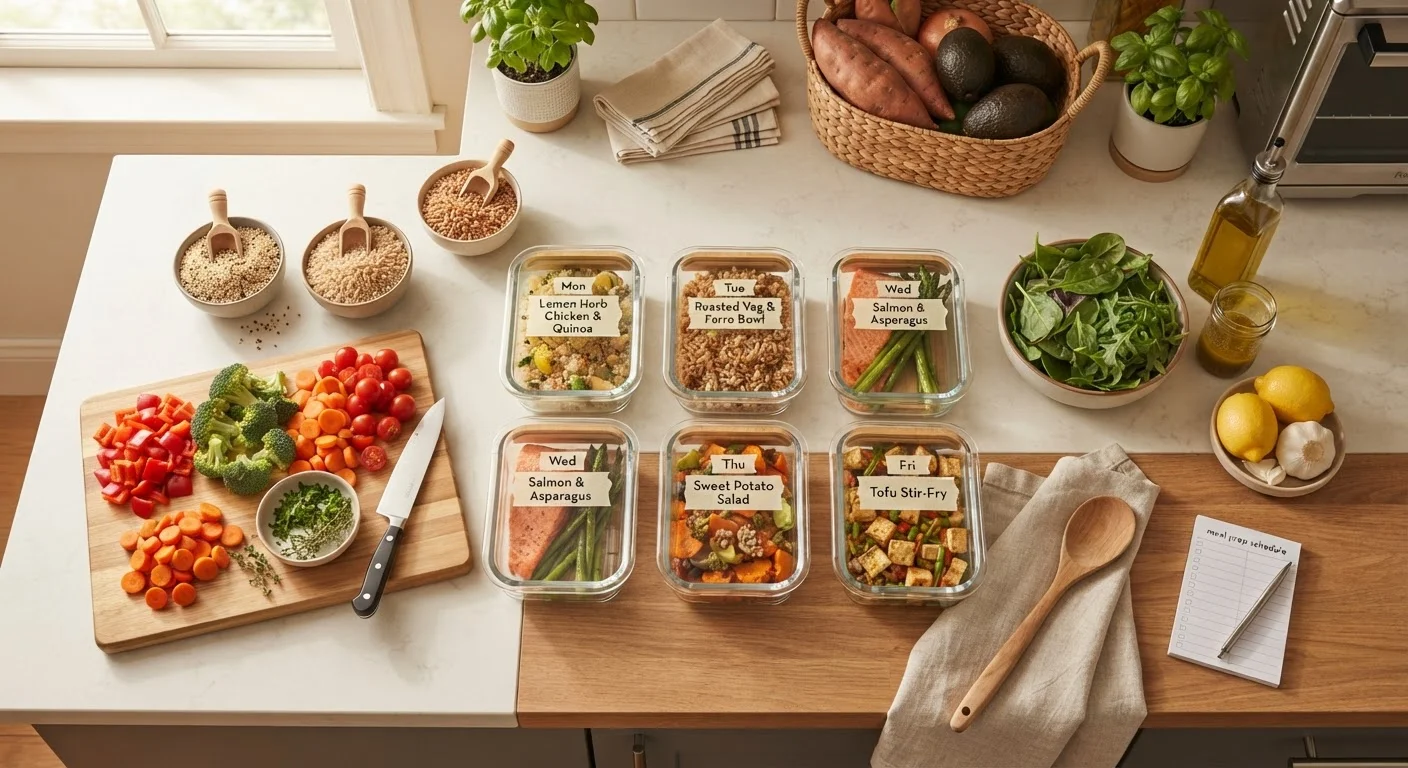
Cooking complete meals ahead of time leads to monotony and food fatigue. Cooking components - a large batch of cooked grains, a tray of roasted vegetables, a portion of cooked beans or protein - gives you building blocks that can be combined differently across multiple meals. This approach preserves variety while capturing most of the efficiency benefit of batch cooking.
Shop from a structured list tied directly to your weekly plan.
Grocery shopping without a plan is one of the most reliable routes to food waste and impulse purchasing. A written list reduces the cognitive load at the store, shortens shopping time, and ensures you have what you need for the meals you've planned. Studies on grocery shopping behavior link list-based shopping to both lower food expenditure and reduced food waste.
Designate one intentional flex night per week.
Having no planned meal for one night removes the all-or-nothing pressure that causes people to abandon their plan entirely when life intervenes. It signals to yourself that deviation from the plan is accounted for, not a failure. This mindset shift is supported by self-regulation research, which shows that perceived flexibility increases long-term adherence to behavioral routines.
Keep a short, reliable list of 15-minute fallback meals.
Decision fatigue peaks at the end of a long day, exactly when you most need to make a dinner choice. Having three to five fallback meals you know by heart - requiring no recipe, minimal prep, and pantry staples - means you can always pivot without defaulting to ultra-processed options. These meals function as a safety net, not a backup plan.
Building Your Weekly Rhythm
Consistent meal planning works best when it's anchored to a recurring weekly rhythm rather than treated as a one-off project. Pick one planning window - typically 20-30 minutes on a Saturday or Sunday - to review what's already in your pantry, sketch a loose menu for the week, and write a grocery list. Then designate a separate cooking block for batch prep. Even 60-90 minutes of prep can yield cooked grains, roasted vegetables, and a protein or two that carry multiple meals.
If your schedule is unpredictable, the same principle used for building weekly movement habits applies here: anchor your routine to fixed points in the week, then allow flexibility around them. Budget-conscious planning is also achievable - the strategies for eating well on a budget article outlines how to prioritize nutrient density without expensive specialty items.
Keeping the Plan Alive When Things Go Off-Track
No plan survives the week unchanged, and that's expected. The goal is resilience, not rigidity. Build in one deliberate flex night - a night with no planned meal - so that an unexpected late meeting or social invitation doesn't feel like a failure. Keep a short list of reliable fallback meals that you can pull together in under 15 minutes from pantry staples: canned beans over grains, scrambled eggs with whatever vegetables are on hand, or a hearty soup from frozen stock.
Treat any week where you cooked at home more than you didn't as a success. Behavioral research on dietary habits suggests that consistency over time - not any single perfect week - is what drives meaningful health outcomes. The planning habit itself is the practice worth protecting.
~35%
Reduction in fast-food consumption among meal planners
A study published in the International Journal of Behavioral Nutrition and Physical Activity found that people who planned their meals were significantly less likely to rely on fast food and more likely to have higher diet quality overall.
1 in 3
US adults report regularly skipping meal planning
Survey data from the International Food Information Council consistently shows that time constraints and decision fatigue are the most frequently cited barriers to home cooking among American adults.
This article provides general nutrition and lifestyle information for educational purposes and is not a substitute for personalized advice from a registered dietitian or qualified healthcare provider.